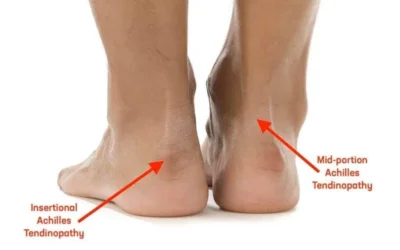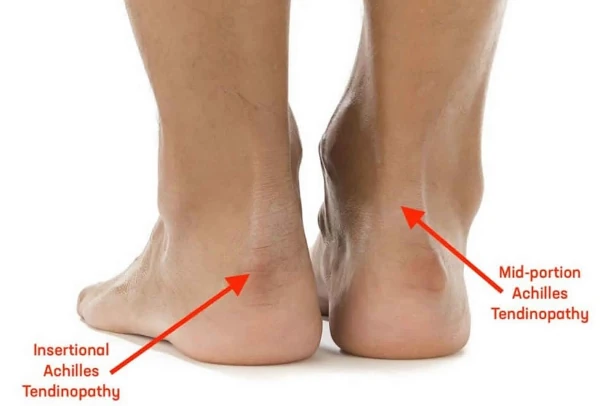
Achilles tendinitis is inflammation or irritation of the Achilles tendon, the thick band of tissue connecting your calf muscles to your heel bone. It usually causes pain, stiffness and swelling at the back of the ankle, often worse first thing in the morning or after exercise. The good news is that most cases respond well to physiotherapy without needing surgery.
What Is Achilles Tendinitis?
The Achilles tendon takes a lot of load every time you walk, run or jump, so it’s prone to overuse injuries. When the tissue becomes irritated faster than it can repair itself, you get the pain and stiffness typical of tendinitis. Left untreated, it can become a longer-term problem, so it’s worth addressing early.
The Two Types of Achilles Tendinitis
Not all Achilles pain is the same, and the type affects how we treat it:
- Insertional Achilles tendinopathy – pain right at the point where the tendon attaches to the heel bone, usually caused by compressive forces when the ankle bends upward (for example, walking uphill or wearing stiff-backed shoes).
- Mid-portion Achilles tendinopathy – pain roughly 2 to 6 centimetres above the heel, in the middle of the tendon, typically the result of overuse rather than a single injury.
What Causes It
Achilles tendinitis is most often an overuse injury. Common triggers include a sudden increase in running distance or intensity, tight or weak calf muscles, unsupportive footwear, and returning to sport too quickly after a break.
How We Treat Achilles Tendinitis
Treatment is built around getting the tendon to tolerate load again, not just resting it:
Exercise Therapy
Targeted stretching and strengthening speed up healing. Eccentric strengthening – slowly lowering your heel down after rising onto your toes – is particularly effective for tendinitis that has become persistent, and is usually the backbone of a home exercise programme.
Orthotic Support
A heel wedge or a custom insole reduces the strain on the tendon with every step and gives it a chance to settle.
Tecartherapy
This delivers warmth deep into the tissue, which helps reduce inflammatory markers and supports tissue healing alongside manual therapy.
Shockwave Therapy
Mechanical waves are passed through the skin to the injured area to increase blood flow to the tendon. It’s typically given over 4 to 6 sessions, spaced about a week apart, and is a good option for cases that haven’t improved with exercise alone.
What to Expect From Treatment
Some patients notice mild, temporary discomfort, redness, bruising, swelling or numbness after shockwave or Tecartherapy sessions. This is normal and usually settles within a week.
When to See a Physiotherapist
If your Achilles pain hasn’t improved after a week or two of rest and gentle stretching, or if it’s affecting how you walk, it’s worth getting it assessed. Early treatment generally means a faster, more straightforward recovery.
FAQ
Can Achilles tendinitis heal on its own?
Mild cases can improve with rest, ice and a reduction in activity, but ongoing or recurring pain usually needs a proper loading programme from a physiotherapist to fully resolve and to stop it coming back.
How long does Achilles tendinitis take to heal?
It varies with severity, but many patients see meaningful improvement within 6 to 8 weeks of consistent treatment, with mid-portion cases sometimes taking longer than insertional ones.
Is it OK to keep running with Achilles tendinitis?
Usually you’ll need to reduce load rather than stop completely. A physiotherapist can help you work out how much activity your tendon can currently tolerate, so you keep moving without making it worse.
Ready to get started? Book your Initial Physiotherapy Assessment today.