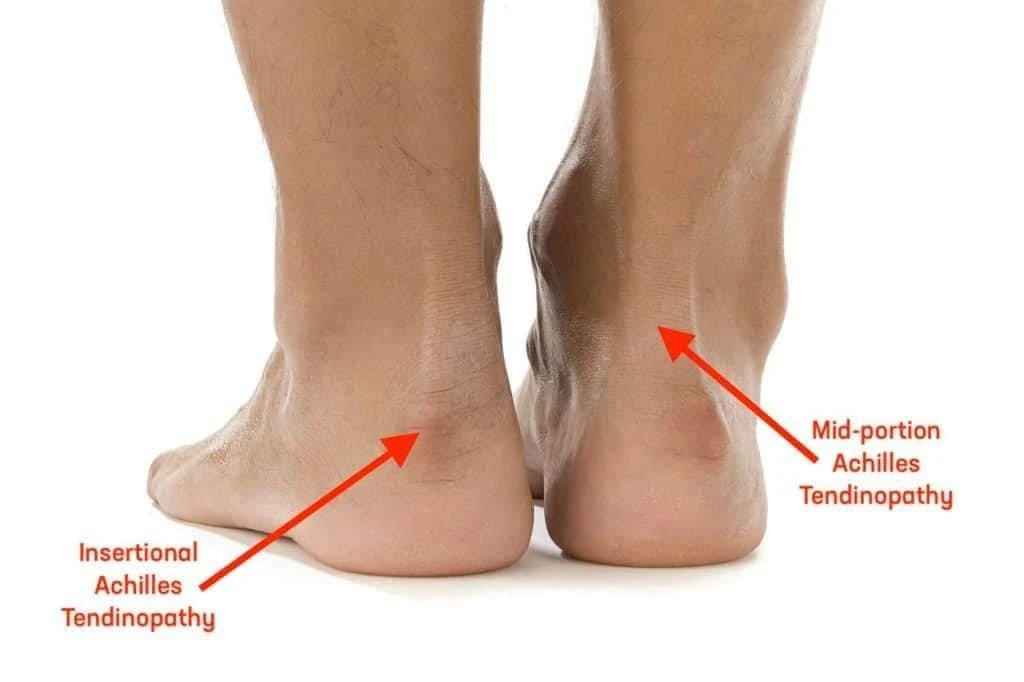
Pain and stiffness around the Achilles is often described simply as “Achilles tendinitis”, but two related conditions can produce very similar symptoms: tendonitis and tenosynovitis. Understanding the difference, and why it often does not change your treatment plan, can help make sense of what is happening in your ankle.
What Is the Difference?
Achilles tendinitis (or tendinopathy) is a degenerative condition affecting the tendon itself. Achilles tenosynovitis is a similar condition, but it affects the sheath that surrounds the tendon rather than the tendon fibres. In terms of symptoms, the two are very similar, and it is practically impossible to reliably tell them apart without imaging such as an MRI or ultrasound scan.
In a large number of cases, both conditions exist together at the same time. Because the treatment approach for tendonitis and tenosynovitis is much the same, reaching an exact diagnosis is often not necessary before starting treatment.
How These Conditions Are Treated
Treatment follows a similar approach to that used for Achilles tendinitis more broadly:
Rest and Load Management
Reducing aggravating activity, alongside cold therapy where helpful, gives the tissue a chance to settle before building load back up gradually.
Electrotherapy
Treatments such as Tecartherapy, ultrasound or shockwave therapy can help reduce pain and inflammation in both the tendon and the surrounding sheath.
Exercise Therapy
Provided it is comfortable to do so, gently stretching the calf muscles, including with a foam roller, along with eccentric calf exercises, plays a central role in recovery.
Acupuncture
Acupuncture is particularly effective for tendon issues of this kind, and can meaningfully reduce the amount of healing time required.
Medical Options
In some cases a GP or consultant may consider medication or a corticosteroid injection alongside physiotherapy, particularly where pain is limiting participation in exercise-based treatment.
What to Expect From Treatment
Because tendonitis and tenosynovitis often overlap, most patients follow a shared, graduated rehabilitation programme rather than two separate protocols. It is important to do less if an activity is painful, rather than pushing through, so your programme is adjusted as your tolerance improves.
When to See a Physiotherapist
If Achilles pain and stiffness has not settled with rest, or is limiting how you walk or exercise, it is worth having it properly assessed. A physiotherapist can build a loading programme suited to your specific presentation, whether the tendon, the sheath, or both are involved.
FAQ
Do I need a scan to know which condition I have?
Not necessarily. Because treatment is largely the same for both conditions, your physiotherapist can usually begin an effective treatment plan based on a clinical assessment alone.
Is it safe to keep exercising with tenosynovitis?
Generally yes, provided it is comfortable. The general rule is to do less if an activity causes pain, and build back up gradually as symptoms allow.
Can acupuncture really speed up healing?
Many patients find acupuncture helpful for tendon-related pain, and it is often used alongside exercise therapy and electrotherapy rather than as a stand-alone treatment.
Ready to get started? Book your Initial Physiotherapy Assessment today.