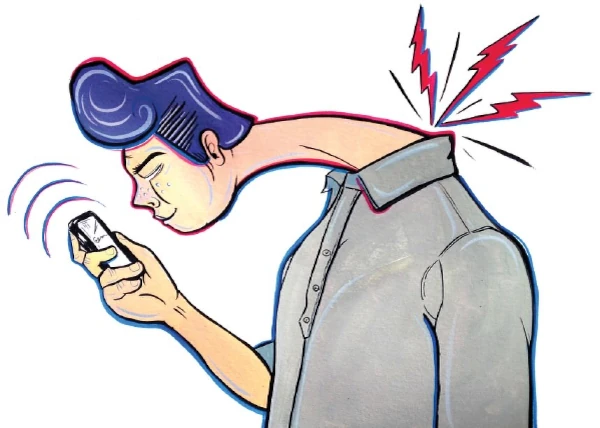
If your neck and shoulders ache after hours spent looking down at your phone or laptop, you may be dealing with text neck syndrome. It’s one of the most common postural complaints we see in clinic today, and the good news is that it responds very well to a few simple changes.
What Is Text Neck Syndrome?
Text neck syndrome describes the strain that builds up in your neck, shoulders and upper back from spending long periods looking down at a screen. When your head tips forward, the effective load on your neck increases dramatically, since the spine has to support far more weight at a forward angle than when your head sits directly over your shoulders. Do that for hours a day, every day, and the muscles, joints and discs in your neck start to feel it.
Signs You Might Have It
Text neck doesn’t always show up as sharp pain. More often it’s a dull, nagging discomfort that builds over the course of a day. Common signs include a stiff or achy neck, tight shoulders or upper back, tension headaches that start at the base of the skull, and a hunched, forward-head posture that feels hard to correct even when you try to sit up straight.
What It Does to Your Neck Over Time
An occasional slouch over your phone isn’t going to cause lasting harm. The problem is repetition. Over months and years, sustained forward head posture can lead to muscle imbalances, with some muscles becoming tight and overworked while others weaken, along with increased stress on the neck’s joints and discs. This is why text neck is worth addressing early, before it becomes a more entrenched postural habit.
6 Ways to Fix and Prevent Text Neck
- Keep your chin up. Try to keep your ears roughly in line with your shoulders rather than jutting forward. A small change in chin position makes a big difference to the load on your neck.
- Relax your shoulders. Rolling your shoulders back and down, rather than hunching them toward your ears, takes pressure off the muscles at the base of your neck.
- Sit tall with your ribs up. Good neck posture starts lower down. Sitting with a tall spine and your ribcage lifted makes it much easier to keep your head in a neutral position.
- Bring the phone up, not your head down. Whenever you can, lift your phone or screen closer to eye level instead of dropping your chin to look at it.
- Do slow range-of-motion stretches. Gentle neck rotations, side bends and chin tucks through the day help keep the joints mobile and ease tension before it builds up.
- Take regular tech breaks. Even a 30 to 60 second break every 20 to 30 minutes to look up and reset your posture can meaningfully reduce cumulative strain.
How Physiotherapy Can Help
If text neck has become a persistent problem, physiotherapy can speed up recovery and help prevent it coming back. We start with a full assessment of your neck, shoulder and upper back posture, then build a treatment plan that may include hands-on therapy to ease tight muscles and stiff joints, targeted strengthening exercises for the deep neck and upper back muscles, and practical, personalised advice on setting up your workstation and daily habits.
More specifically, physiotherapy for neck pain generally works towards a few clear goals: reducing pain and stiffness, improving the range of motion in your head and neck, building dynamic strength in the neck and its supporting muscles, and developing strategies to prevent the pain from coming back. Even when pain cannot be eliminated completely, physiotherapy can still make a real difference to your neck posture and how comfortably you move through daily activities.
Frequently Asked Questions
Is text neck permanent?
No. In most cases text neck is very responsive to postural changes, stretching and, where needed, physiotherapy. The earlier you address it, the faster it tends to resolve.
How long does it take to fix text neck posture?
It varies from person to person, but many people notice an improvement within a few weeks of consistently applying postural changes and doing targeted exercises. Long-standing cases may take longer to fully resolve.
Can text neck cause headaches?
Yes. Tension at the base of the skull from a forward head posture is a common trigger for headaches, particularly ones that start at the back of the head and spread toward the temples.
Ready to get started? Book your Initial Physiotherapy Assessment today.