If you have been dealing with persistent tendon pain that has not responded to rest and stretching alone, your physiotherapist may suggest shockwave therapy. It is one of the more established non-surgical treatments for stubborn tendon conditions, backed by a solid body of clinical evidence, and it is often used alongside exercise-based rehabilitation rather than on its own.
What Is Shockwave Therapy?
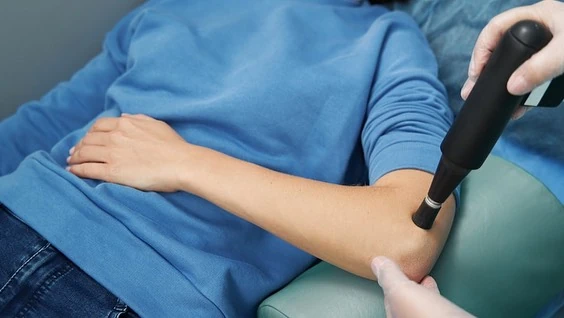
Shockwave therapy uses a specialist device to deliver acoustic energy, essentially low-energy sound waves, through the skin to the injured area. This increases blood flow to the site and triggers a cascade of effects that support healing.
Which Conditions It Helps With
Shockwave therapy is used across a wide range of lower and upper limb conditions, including:
- Tennis elbow and golfer’s elbow
- Greater trochanteric pain syndrome (hip)
- Proximal hamstring tendinopathy
- Patella tendinopathy (knee)
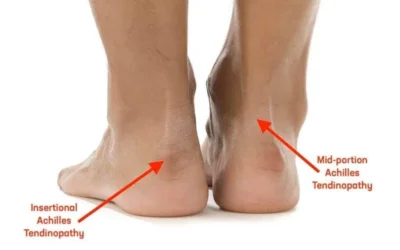
- Insertional and mid-portion Achilles tendinopathy
- Plantar fasciitis
How It Works
Shockwave therapy helps with persistent tendon pain in a few distinct ways. First, the shockwaves desensitise nerve endings, which often brings an immediate reduction in pain. They also cause controlled micro-trauma in the tissue, which activates and accelerates the body’s own healing response, and they can help break down disorganised tissue and calcification that has built up around a chronically irritated tendon.
Is There Evidence Behind It?
Shockwave therapy is well supported by the National Institute for Health and Care Excellence (NICE), which provides evidence-based guidance to improve health and social care across both NHS and private practice. NICE has produced specific guidelines for the use of shockwave therapy in Achilles tendinopathy, plantar fasciitis and calcific tendinopathy.
Research has shown shockwave therapy significantly reduces the pain associated with tendinopathies and improves functionality and quality of life, with some studies reporting a success rate of around 70% for tendinopathies (Moya et al., 2018; Dedes et al., 2018).
What to Expect During Treatment
Sessions are typically quick, and most patients are able to carry on with normal daily activities afterwards. It is common to feel some mild discomfort during or shortly after treatment, and occasionally some redness or bruising, which usually settles within a few days. A course of shockwave therapy is generally given over several sessions rather than as a single treatment.
When to See a Physiotherapist
If a tendon problem has lingered for more than a few weeks despite rest, or keeps coming back whenever you return to activity, it is worth having it properly assessed. Your physiotherapist can confirm whether shockwave therapy is a suitable option for your specific condition, usually alongside a loading and strengthening programme.
FAQ
Is shockwave therapy painful?
Most patients feel a degree of discomfort during treatment, similar to a firm, repetitive tapping sensation, but it is generally well tolerated and brief.
How many sessions will I need?
This varies by condition and how long it has been present, but shockwave therapy is usually delivered as a short course of sessions spaced roughly a week apart rather than a single visit.
Can shockwave therapy be combined with other treatments?
Yes. It is commonly used alongside exercise therapy and manual treatment as part of a broader rehabilitation plan, rather than as a stand-alone fix.
Ready to get started? Book your Initial Physiotherapy Assessment today.